Saturday, May 10, 2014

Culture Show and Chairman Mao


Rapeseed in Sichuan province
 Here are a few pictures out the window of the van as we drove back from Leshan Giant Buddha. The green plant is rapeseed or canola. A few weeks earlier these fields were covered with bright yellow flowers. That is an irrigation channel on piers crossing the field.


These terraces are growing tea plants. You can see some more rapeseed in the lower right.


Decorated toll plaza in Sichuan

No, this is not some ancient cultural relic. It is a toll booth on the highway.
Sichuan Opera at Shufeng Yayun Teahouse in Chengdu

After dinner went to the Shufeng Yayun Teahouse for a Sichuan Opera show.


Dancing, singing, music.


Musician at Shufeng Yayun Teahouse in Chengdu

This is an erhu or a "two string" instrument.

As is this. This guy was amazing.
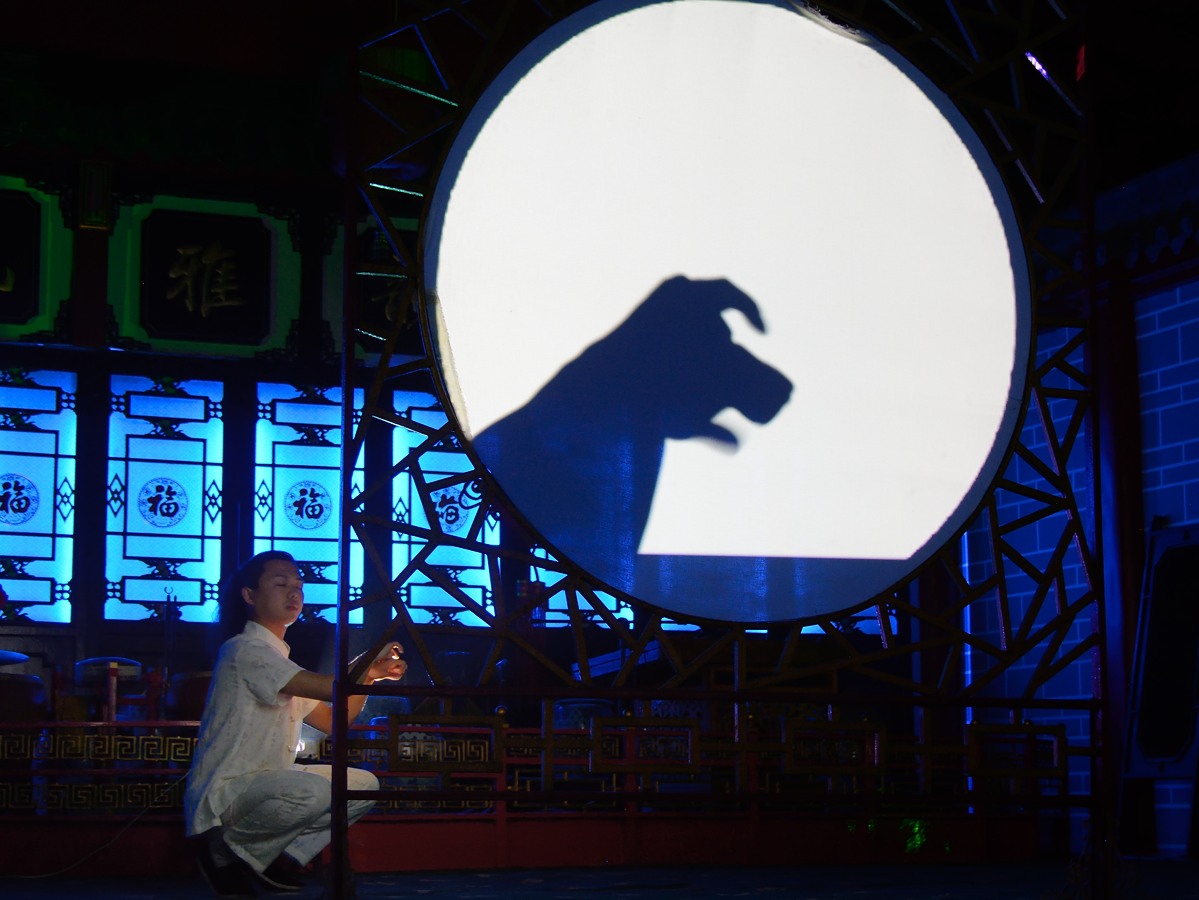
Shadow puppet Shufeng Yayun Teahouse in Chengdu

This guy did an amazing series of hand shadow figures. This is one of the more simple ones.


This is a puppet performance.


This guy was part of a skit. I forget the story but his wife puts this bowl of burning oil on his head to help him break his gambling habit. Anyway he can move the bowl from the top of his head to his forehead without his hands so that he can go under that bench in the background.


Fire-breathing.
Face changing at Shufeng Yayun Teahouse in Chengdu

This guy was amazing. Somehow he changes the mask over and over again in a fraction of a second - really the blink of an eye.


Statue of Chairman Mao in Tianfu Square in Chengdu Sichuan

After the show we stopped downtown for me to take a picture of the Mao statue. During the cultural revolution statues like these were erected in the center of all the cities - if the local officials knew what was good for them. Most have since been moved to less prominent locations but Chengdu is the exception.

Mahjong is VERY popular in Chengdu. Locals joke that the Great Helmsman is offering to join a 5 RMB game. Others say he turned to stone waiting to get a taxi.

Accoding to Wikipedia, before 1967, the site was occupied by an ancient palace from the Shu Kingdom of ancient Sichuan. The palace was destroyed by Red Guards and the moat around it filled in to make an air raid shelter in 1967.


Mao is looking at this scene with many monuments to capitalism.

Friday, May 9, 2014

Leshan Giant Buddha

Leshan Giant Buddha from the river

The weekend of April 12 and 13, I took a vacation day and we took a trip to Chengdu in Sichuan province. Our first destination was the Giant Buddha at Leshan. We started with a boat trip to see the carving from the river.


Leshan is about a 2 hour drive south of Chengdu. The Buddha is carved into a sandstone cliff at the confluence of 3 rivers. They say that the cliffs look like a Buddha lying on his back. You can see why they think it is a male Buddha.


After the boat ride we headed to the park to get a closer look. I have no idea what these kids were up to but they were cute.


We ran into a momentary traffic jam on the steps going up the bluff. This tour group had stopped to take pictures of a small Buddha.


There are hundreds of the small Buddha figures carved into the bluff. Many have worn away over the centuries. Work on the big Buddha started in the 713 A.D. They ran out of money so no work took place for 70 years. The figure was completed in 803.


You get a nice view of Leshan and the confluence of 2 of the rivers on the way up.


No one was lining up to get their picture taken with the white tiger. In Buddhist culture the "bai hu" or white tiger is an inauspicious animal.


Here is another candidate for worst translation. It means don't throw stuff off the mountain.


Leshan Giant Panda or 乐山大佛 or Lèshān Dàfó

This is the scene at the top of the bluff. You can get a sense of the size of the Buddha figure from the people on the other side.  The Buddha figure is over 230 feet tall.


These people are waiting in line to walk down the steps and walk another trail along the river. We took a different route.

Click to enlarge.


This is the monk who started the project.


This young woman asked if she could get her picture taken with us. There weren't many foreigners around. I guess we were pretty exotic sight in this part of China.


There is a very active temple at the Buddha. In the foreground you can see people lighting candles and in the center a large incense burner.


These lamps were interesting.


On the right hand side a guy cleans up the burned incense. On the left, the older guy gives instruction on how to properly offer the incense.


No pictures are allowed inside the hall so I took this one from outside.


This looks more Indian than Chinese to me. It has apparently been refreshed recently very colorful.


What's the connection you are asking?

It landed on Margot's hand while she was taking a video in the temple courtyard.


These were in the temple garden.


Thursday, May 8, 2014

Ed and Nancy Visit the Temple of Heaven and the Forbidden City


The four of us visited the Temple of Heaven on the weekend. It was pretty busy since it was the last day of the Qing Ming holiday.

Here some links to previous blog postings on the Temple of Heaven.

Tom and Misheil at the Temple of Heaven
Mike and Amanda at the Temple of Heaven
Tom at the Temple of Heaven
Work Colleagues at the Temple of Heaven


I've mentioned before that the park is a popular spot for wedding photographs. They were back again this day, also.

Click to enlarge.


A few days later Margot, Ed and Nancy visited the Forbidden City. It was a weekday and not very busy.


Here they are standing in front of one of the halls.


The place was practically empty.


This is one of the huge stone carvings. It was transported as a single piece on an iced road during the winter.


Margot took some nice architecture pictures.


This is a very minor hall as evidenced by only 3 figures on the eve.

This one is more important -  7 figures in total.

Click to enlarge.

Here Ed and Nancy pose in front of the intertwined branches of the cypress that is said to symbolize love. Allegedly, the last Qing emperor and empress, Puyi and Wanrong had their picture taken here on their wedding day.