Monday, October 20, 2014

Tianning Si


I've  been a real slacker when it comes to posting pictures on the blog. I'm way behind but hope to catch up soon.

These pictures are from a Buddhist temple called Tianning Si. I took these pictures on a walking tour organized by the Chinese Culture Center back in July.


The temple contains a 900 year old pagoda built of brick and stone. Although it is not hollow, it is built to resemble similar wooden structures with over-hanging eaves.

The name Tianning is made up of the characters  天 (tian) and 宁 (ning). Tian means heaven or sky and ning means calm, peaceful, or serene.  Si means temple.

That is the same tian as in Tian'anmen Square.


The stone carvings are starting to show their age but look pretty good for 900 years old.

Click to enlarge.


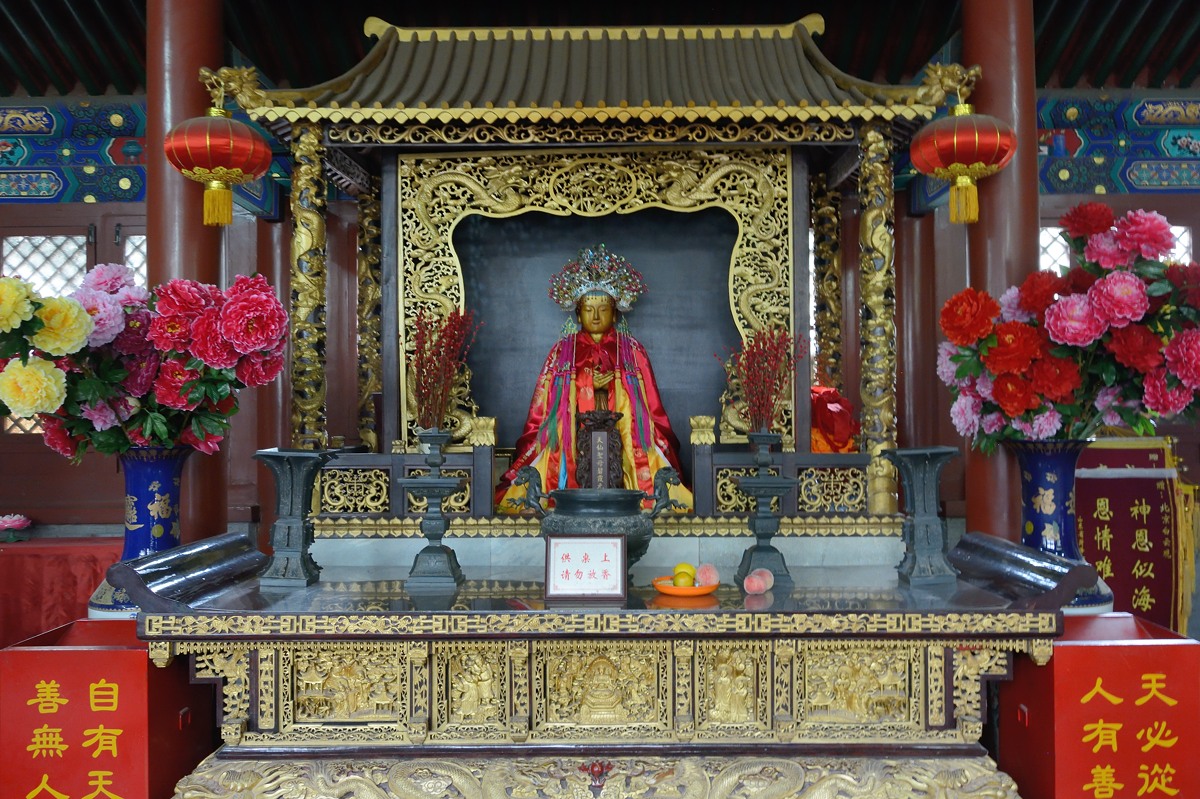
This wooden Buddha is in one of the temple buildings on the grounds.


I see coconut milk powder, oranges, peaches and crackers left as offerings.


It is a working temple and you can talk with the monks (if you speak Chinese). I believe this monk is a woman.


I wish I could tell you more about these murals. I'm sure there is a story in them.


These are incense sticks burning in one of the incense burners in the temple.


The person on the right is our tour guide, Feng Cheng. He always makes a point to engage with the locals and almost always learns some interesting tidbit about the location. This was back in July. I don't recall the discussion.


When this temple was built it was out in the countryside  or suburbs surrounding Beijing. Many years ago the city grew to surround the temple and the city wall was extended to include it. Now there is a heating plant next door to supply heat to city residents in the area during the winter.


Sunday, August 10, 2014

Baiyun Guan - White Cloud Temple

San Qing Hall at Baiyun Guan

Last month we went on a tour to the White Cloud Temple in Beijing. This is a Taoist temple that dates back to mid-8th century. That's 8th not 18th so it has a very long history.

These are 2 of the 3 highest deities in Taoism.


It is a working temple and is staffed with monks that worship there, offer guidance to worshipers, answer questions of tourists, etc. In the Taoist (or Daoist) tradition the monks wear there hair uncut on the top of their head.


Taoism or Daoism is difficult to define. In some ways it is a religion and in other ways it is a philosophy.  You can learn more about it here --> Taoism


The temple is in great condition. It was closed during the cultural Revolution but was well protected during that chaotic period in Chinese history.

I didn't do a good job taking notes or pictures of the signs so I'm not sure what deity this is.


Sculpture in Qiu Zu Deity Hall at Baiyun or White Cloud Temple

These sculptures are in the Qiu Zu Deity Hall. The hall was built in 1228. The sculptures depict the journey of Qiu Zu to meet Genghis Khan. Qiu Zu is the founder of the Long Men (Dragon Gate) sect of the  Quan Zhen (Complete Reality) Taoist tradition and is buried under the hall.


There are incense burners all over. The small signs you see in many of the pictures ask worshipers to not burn incense on the alter tables.


This grandmother was passing the traditions down to her grandson by demonstrating proper incense offering technique.


Margot stopped for a picture at one of the halls.


Ba Xian or eight immortals

This picture and the following picture depict the Ba Xian or eight immortals. They represent the rich and the poor, pretty and ugly, old and young and male and female.


I'll let you figure out which is which. The message is that everyone has the potential to become immortal.


Taoism Deity Lu at Baiyun Guan in Beijing

This deity is Lu. He represents prosperity, rank and influence. The word lu means "an official's salary".


Shou at Baiyun Temple in Beijing

This is Shou. He represents longevity. He is holding a peach which represents immortality.

I didn't get a picture of Fu. He represents good fortune or happiness.

Fu, Lu, and Shou represent the 3 characteristic of the good life in Chinese culture.

Shou is pronounced like the English "show!"


Bixia Yuanjun at White Cloud Temple in Beijing (BaiYun Guan)

This is goddess Bixia Yuanjun. She can bring lovers together and bring peace and harmony to the home.


Kuixing at Baiyun Guan or White Cloud temple in Beijing

This Kuixing. He is standing outside the Wen Chang deity hall. You rub his stomach for good luck on school tests or examinations.

All these deities have birthdays in the Chinese calendar and these are popular days to visit.


I'm pretty sure this box contains fire extinguishers.


This wall depicts the 12 animals of the Chinese zodiac calendar. The first is the rat.


Feng Cheng of the Chinese Culture Center in Beijing

The man in the white shirt is Feng Cheng. He is the man behind Chinese Culture Center. His business model is high quality tours for foreign visitors and expatriates. I can wholeheartedly endorse his tour company and their services.


I'm not sure what this is but it was in the courtyard and I thought it was pretty.


I'm pretty sure this is an eggplant. Not particularly pretty but interesting anyway, I thought.

Cick to enlarge.


Sunday, July 27, 2014

Ritan Park and Sunset

Ozark climbing wall at Ritan park in Beijing

A few weeks ago we took a walk down to Ritan park in the late afternoon to see what was going on.

Other than people like us out for a stroll most of the action was at the climbing wall.

Ozark is a Chinese brand. I don't normally think of the Ozarks as a big mountaineering destination but maybe all the cool mountain range names were taken.

This guy scurried right up the wall to this point. He had obviously done this before.


He pulled himself right over the overhang and up to the top.


Climbing isn't for guys only - there were more than a few women there, also.


Yellow rose at Ritan park in Beijing

There were some nice roses in the park.


Ritan means Temple of the Sun. There are 4 ancient parks on the 4 compass points with the Forbidden City in the center. To the south is the most famous - Tiantan or Temple of Heaven which I have written about many times. To the north is Ditan or Temple of Earth. To the west is Yuetan or Temple of the Moon. You can figure out the location of Ritan.


There was a small group of dancers getting some exercise.


This is a pond and pavilion that I have posted pictures of before. See this posts for the scene in spring.

Spring in Beijing
Ritan - Spring 2013


Beautiful sunset in Beijing

We had another beautiful sunset a few weeks after the other one I wrote about.


This is mostly just unusual. Margot had never seen a purple sky so she snapped this picture. The combination of smog and a red sunset turned the sky purple, I guess. This is the color - I didn't change a thing.